.jpg)

.png)
NIGHT LAB I | MATERIALS OF TOMORROW
.svg)
.svg)
What happens when we stop asking materials to simply perform—and start designing them to respond, transform, and become part of the process?
Night Lab I takes us inside the laboratories and workshops where the boundary between the living and the built is dissolving. From timber that can harness moisture to transform its own shape, to programmable materials that can self-assemble and adapt, to new generations of concrete designed to reduce carbon emissions and rethink how we build, we are witnessing a fundamental shift in the way materials are conceived, made, and used.
The evening will open with a performance from muscian Luke Stewart.
Doors open at 5:30 PM, event begins promptly at 6:00 PM.
Biographies
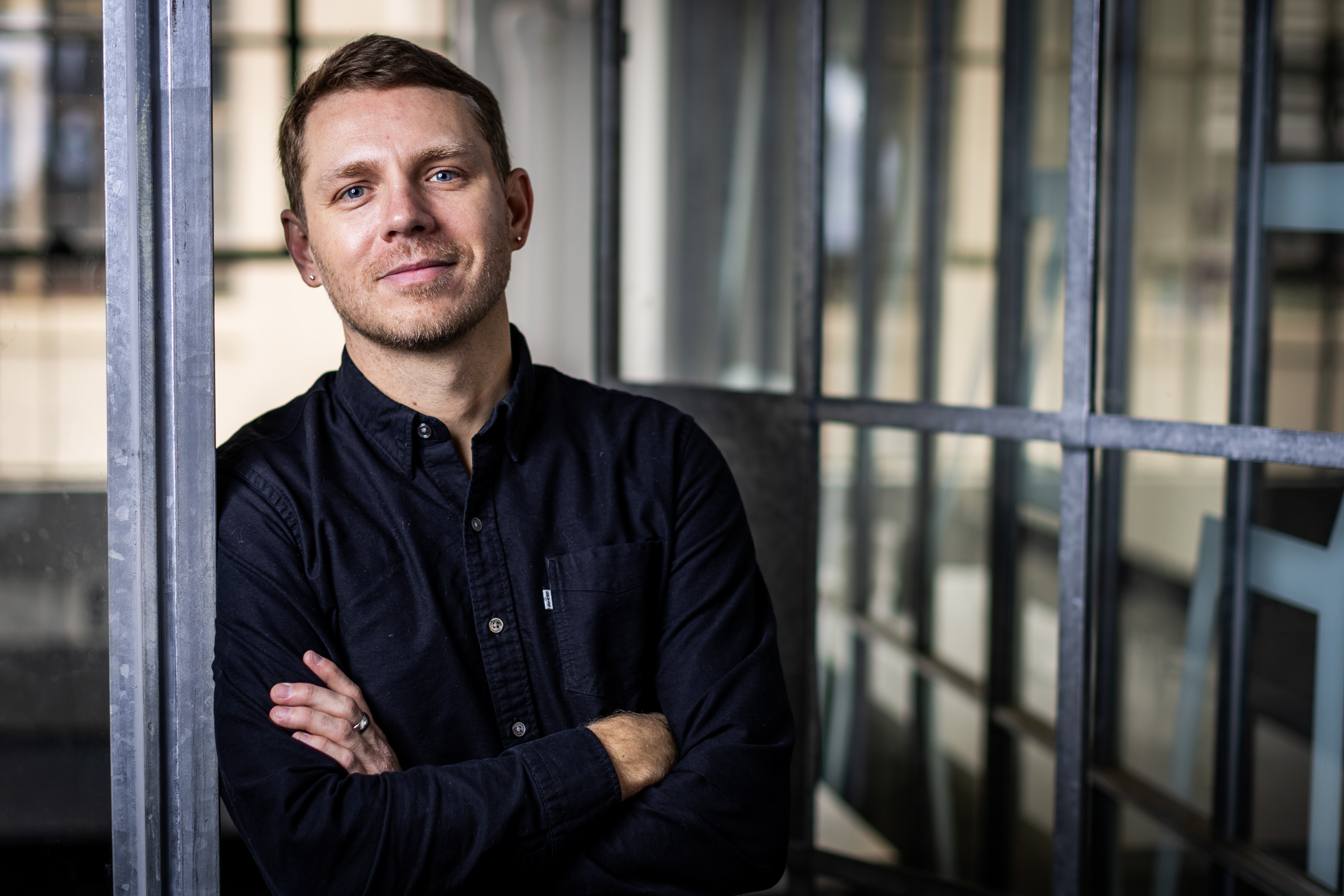
Skylar Tibbits is a designer, computer scientist, and Associate Professor of Design Research in MIT’s Department of Architecture. He is the founder and co-director of the Self-Assembly Lab at MIT and also directs the department’s undergraduate Design programs. His research explores self-assembly, programmable materials, and adaptive systems within the built environment.
Tibbits holds a professional degree in architecture with a minor in experimental computation from Philadelphia University, as well as master’s degrees in design computation and computer science from MIT. He has worked with leading design firms including Zaha Hadid Architects, Asymptote Architecture, and Point b Design.
His design and research work has been exhibited widely, including at the MoMA, Centre Pompidou, Victoria and Albert Museum, Philadelphia Museum of Art, Cooper Hewitt Smithsonian Design Museum, and others. He is the author of Things Fall Together: A Guide to the New Materials Revolution (Princeton University Press, 2021), Self-Assembly Lab: Experiments in Programming Matter(Routledge, 2016), Active Matter (MIT Press, 2017), and co-editor of Being Material (MIT Press, 2019). He also serves as Editor-in-Chief of 3DPrinting and Additive Manufacturing.
Tibbits’ contributions have been recognized with numerous awards, including LinkedIn’s Next Wave Award for Top Professionals Under 35 (2016), R&D Innovator of the Year (2015), National Geographic Emerging Explorer (2015), WIRED Fellowship (2014), Architectural League Prize (2013), Ars Electronica Next Idea Award (2013), and TED Senior Fellowship (2012). In 2008, he was named a “Revolutionary Mind” by SEED magazine.

Laura Kiesewetter is a research associate and PhD candidate at the Institute for Computational Design and Construction (ICD) at the University of Stuttgart, where she explores how architecture can learn from nature to build smarter, lighter, and more sustainably. She holds a Master of Science from the Integrative Technologies and Architectural Design Research (ITECH) program, also at the University of Stuttgart. During her studies, she worked for architecture and façade practices in Stuttgart and London.
Her research at ICD focuses on advanced computational design and construction technologies for novel material system sand their integration into the built environment, with a particular interest in materially programmed, self-shaping lightweight timber structures. She has applied this research in several architectural demonstrators, including the HygroShell and the Wangen Tower and contributed to exhibitions in Bonn, Chicago, and New York. These projects have earned national and international recognition, including the German Design Award and Fast Company's Innovation by Design Award. She is also co-founder of the spin-off company hylo tech, where she brings her research out of the lab and into the real world.
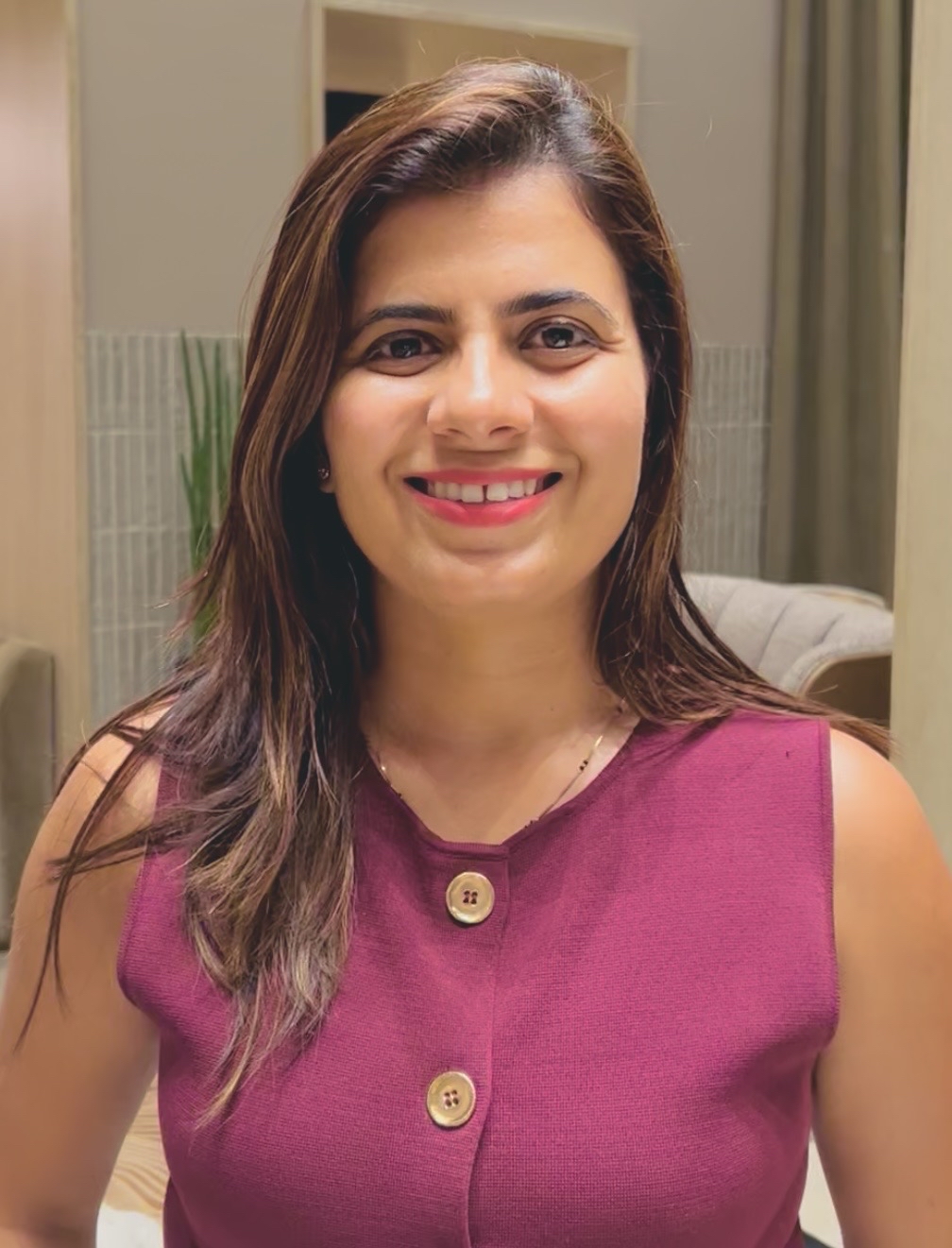
Ragini Nikumbh is a Technical Services Engineer with Heidelberg Materials North America, supporting customers across New York and New England in cement and concrete materials, durability engineering, mix design optimization, and sustainable construction solutions. She combines industry expertise with a strong research background to help advance performance-based concrete specifications and innovative material technologies.
She earned her Ph.D. in Civil Engineering from Kansas State University, where her research focused on concrete durability, air-void systems, freeze-thaw resistance, shrinkage, and predictive modeling of cementitious materials. She has authored and co-authored multiple technical publications and KDOT technical reports on concrete durability and performance-based materials, contributing to both academic research and industry practice.
Prior to joining Heidelberg Materials, Ragini served as a Materials Engineer at ICON, where she worked on the development and characterization of advanced cementitious materials for large-scale 3D concrete printing applications. Her work included formulation of proprietary mortar systems, rheological characterization, durability testing, and development of custom performance-based testing methods.
She is an active member of ASTM International, ACI, and other industry organizations, participates in task groups and standards-development activities that promote performance-based specifications, durability, and sustainability in concrete construction. She frequently collaborates with state DOTs, producers, contractors, and researchers to bridge the gap between laboratory research and field implementation, helping drive innovation and resilience in modern infrastructure.
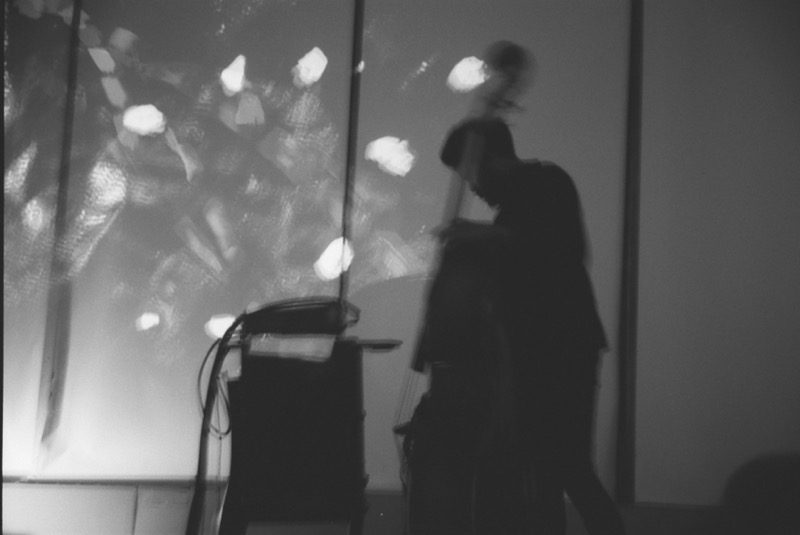
Luke Stewart is a musician, performer, improviser-composer, organizer, and writer-researcher whose work represents a deep reverence for the history and tradition of Creative Music: a tradition which encompasses the diverse styles of expression within the body of Black Music in the United States, Africa, and throughout the world. Stewart’s regular ensembles include Irreversible Entanglements, SILT Trio, Exposure Quintet, and the experimental rock duo Blacks’ Myths; he also performs regularly in numerous collaborations.

Diana Budds is a New York–based writer and editor interested in how design shapes and reflects culture. Her stories on architecture, interiors, and urbanism have recently appeared in The New York Times, The Guardian, Fast Company, Dwell, The Architect’s Newspaper, and Wallpaper. She is part of Van Alen’s inaugural Vanguard cohort of emerging civic leaders and is working on a book about planned cities.
Thank you to our Part II program partners, Vitra and DWIH. Thank you also to Campus OWL, Deutsches Haus at NYU, Goethe-Institut New York, Heidelberg University Association, UAS7, University of Cologne New York Office, The University of Freiburg, and UA Ruhr North America for their support.
This program is a part of Archtober, NYC's Architecture + Design Month
About the Next Frontiers Symposium
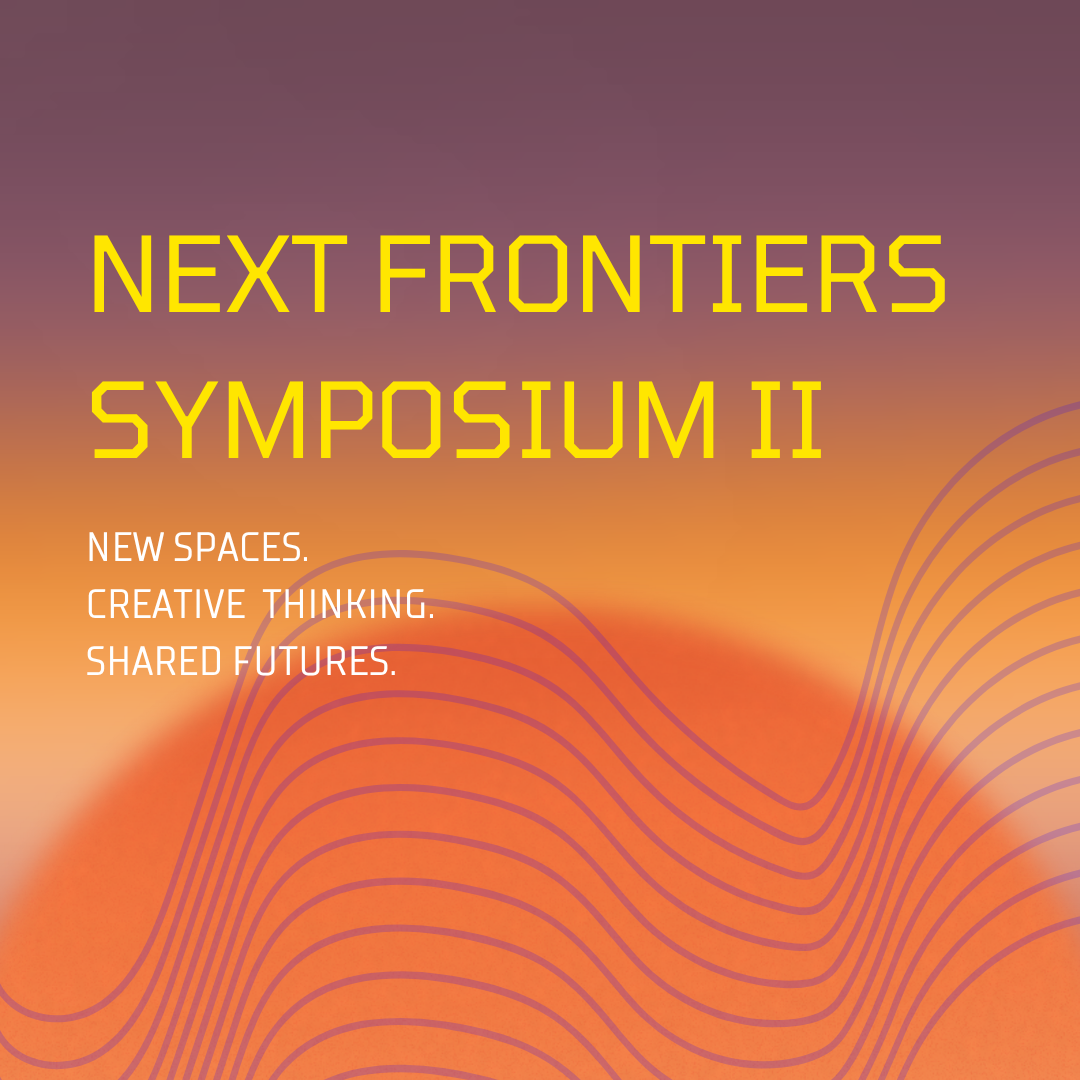
New Spaces. Creative Thinking. Shared Futures
A forward-looking, trans-Atlantic symposium exploring the future of culture, science, technology, and sustainable design where tomorrow’s ideas take shape.
DELIVERING THE NEXT FRONTIERS
How do we get from here to there?
Part II of the Next Frontiers symposium examines how discoveries and innovations are translated into tangible outcomes. From quantum computing and AI to synthetic biology, regenerative materials, neuroscience, and sports science, this three-part series explores the practical frontiers of human potential and technological advancement.
Across sessions, leading experts from the United States and Germany will highlight emerging applications, cutting-edge research, and forward-looking strategies that transform ideas into products, technologies, and experiences, demonstrating how the next frontiers are not just imagined, but delivered. At its core, the series is a story about collaboration: between disciplines, between nations, and between the human and the non-human world.
Next Frontiers II unfolds across three Night Labs, each building on the last:
Night Lab I begins with matter itself — the raw stuff of the built world — and asks what happens when materials become computational and eventually alive. Night Lab II moves inward, to the body and the brain, exploring how synthetic biology and neuroscience are redrawing the boundary between organism and machine. Night Lab III pushes outward into human performance, asking how data, biology, and technology are redefining the limits of what the body and mind can achieve. Together, the three sessions trace a single arc: from the materials we build with, to the bodies we inhabit, to the performance we are capable of.
Each Night Lab follows the same format: part salon, part laboratory, part performance.










What happens when we stop asking materials to simply perform—and start designing them to respond, transform, and become part of the process?
Night Lab I takes us inside the laboratories and workshops where the boundary between the living and the built is dissolving. From timber that can harness moisture to transform its own shape, to programmable materials that can self-assemble and adapt, to new generations of concrete designed to reduce carbon emissions and rethink how we build, we are witnessing a fundamental shift in the way materials are conceived, made, and used.
The evening will open with a performance from muscian Luke Stewart.
Doors open at 5:30 PM, event begins promptly at 6:00 PM.
Biographies
Skylar Tibbits is a designer, computer scientist, and Associate Professor of Design Research in MIT’s Department of Architecture. He is the founder and co-director of the Self-Assembly Lab at MIT and also directs the department’s undergraduate Design programs. His research explores self-assembly, programmable materials, and adaptive systems within the built environment.
Tibbits holds a professional degree in architecture with a minor in experimental computation from Philadelphia University, as well as master’s degrees in design computation and computer science from MIT. He has worked with leading design firms including Zaha Hadid Architects, Asymptote Architecture, and Point b Design.
His design and research work has been exhibited widely, including at the MoMA, Centre Pompidou, Victoria and Albert Museum, Philadelphia Museum of Art, Cooper Hewitt Smithsonian Design Museum, and others. He is the author of Things Fall Together: A Guide to the New Materials Revolution (Princeton University Press, 2021), Self-Assembly Lab: Experiments in Programming Matter(Routledge, 2016), Active Matter (MIT Press, 2017), and co-editor of Being Material (MIT Press, 2019). He also serves as Editor-in-Chief of 3DPrinting and Additive Manufacturing.
Tibbits’ contributions have been recognized with numerous awards, including LinkedIn’s Next Wave Award for Top Professionals Under 35 (2016), R&D Innovator of the Year (2015), National Geographic Emerging Explorer (2015), WIRED Fellowship (2014), Architectural League Prize (2013), Ars Electronica Next Idea Award (2013), and TED Senior Fellowship (2012). In 2008, he was named a “Revolutionary Mind” by SEED magazine.
Laura Kiesewetter is a research associate and PhD candidate at the Institute for Computational Design and Construction (ICD) at the University of Stuttgart, where she explores how architecture can learn from nature to build smarter, lighter, and more sustainably. She holds a Master of Science from the Integrative Technologies and Architectural Design Research (ITECH) program, also at the University of Stuttgart. During her studies, she worked for architecture and façade practices in Stuttgart and London.
Her research at ICD focuses on advanced computational design and construction technologies for novel material system sand their integration into the built environment, with a particular interest in materially programmed, self-shaping lightweight timber structures. She has applied this research in several architectural demonstrators, including the HygroShell and the Wangen Tower and contributed to exhibitions in Bonn, Chicago, and New York. These projects have earned national and international recognition, including the German Design Award and Fast Company's Innovation by Design Award. She is also co-founder of the spin-off company hylo tech, where she brings her research out of the lab and into the real world.
Ragini Nikumbh is a Technical Services Engineer with Heidelberg Materials North America, supporting customers across New York and New England in cement and concrete materials, durability engineering, mix design optimization, and sustainable construction solutions. She combines industry expertise with a strong research background to help advance performance-based concrete specifications and innovative material technologies.
She earned her Ph.D. in Civil Engineering from Kansas State University, where her research focused on concrete durability, air-void systems, freeze-thaw resistance, shrinkage, and predictive modeling of cementitious materials. She has authored and co-authored multiple technical publications and KDOT technical reports on concrete durability and performance-based materials, contributing to both academic research and industry practice.
Prior to joining Heidelberg Materials, Ragini served as a Materials Engineer at ICON, where she worked on the development and characterization of advanced cementitious materials for large-scale 3D concrete printing applications. Her work included formulation of proprietary mortar systems, rheological characterization, durability testing, and development of custom performance-based testing methods.
She is an active member of ASTM International, ACI, and other industry organizations, participates in task groups and standards-development activities that promote performance-based specifications, durability, and sustainability in concrete construction. She frequently collaborates with state DOTs, producers, contractors, and researchers to bridge the gap between laboratory research and field implementation, helping drive innovation and resilience in modern infrastructure.
Luke Stewart is a musician, performer, improviser-composer, organizer, and writer-researcher whose work represents a deep reverence for the history and tradition of Creative Music: a tradition which encompasses the diverse styles of expression within the body of Black Music in the United States, Africa, and throughout the world. Stewart’s regular ensembles include Irreversible Entanglements, SILT Trio, Exposure Quintet, and the experimental rock duo Blacks’ Myths; he also performs regularly in numerous collaborations.
Diana Budds is a New York–based writer and editor interested in how design shapes and reflects culture. Her stories on architecture, interiors, and urbanism have recently appeared in The New York Times, The Guardian, Fast Company, Dwell, The Architect’s Newspaper, and Wallpaper. She is part of Van Alen’s inaugural Vanguard cohort of emerging civic leaders and is working on a book about planned cities.
Thank you to our Part II program partners, Vitra and DWIH. Thank you also to Campus OWL, Deutsches Haus at NYU, Goethe-Institut New York, Heidelberg University Association, UAS7, University of Cologne New York Office, The University of Freiburg, and UA Ruhr North America for their support.
This program is a part of Archtober, NYC's Architecture + Design Month
About the Next Frontiers Symposium
New Spaces. Creative Thinking. Shared Futures
A forward-looking, trans-Atlantic symposium exploring the future of culture, science, technology, and sustainable design where tomorrow’s ideas take shape.
DELIVERING THE NEXT FRONTIERS
How do we get from here to there?
Part II of the Next Frontiers symposium examines how discoveries and innovations are translated into tangible outcomes. From quantum computing and AI to synthetic biology, regenerative materials, neuroscience, and sports science, this three-part series explores the practical frontiers of human potential and technological advancement.
Across sessions, leading experts from the United States and Germany will highlight emerging applications, cutting-edge research, and forward-looking strategies that transform ideas into products, technologies, and experiences, demonstrating how the next frontiers are not just imagined, but delivered. At its core, the series is a story about collaboration: between disciplines, between nations, and between the human and the non-human world.
Next Frontiers II unfolds across three Night Labs, each building on the last:
Night Lab I begins with matter itself — the raw stuff of the built world — and asks what happens when materials become computational and eventually alive. Night Lab II moves inward, to the body and the brain, exploring how synthetic biology and neuroscience are redrawing the boundary between organism and machine. Night Lab III pushes outward into human performance, asking how data, biology, and technology are redefining the limits of what the body and mind can achieve. Together, the three sessions trace a single arc: from the materials we build with, to the bodies we inhabit, to the performance we are capable of.
Each Night Lab follows the same format: part salon, part laboratory, part performance.

What happens when we stop asking materials to simply perform—and start designing them to respond, transform, and become part of the process?
Night Lab I takes us inside the laboratories and workshops where the boundary between the living and the built is dissolving. From timber that can harness moisture to transform its own shape, to programmable materials that can self-assemble and adapt, to new generations of concrete designed to reduce carbon emissions and rethink how we build, we are witnessing a fundamental shift in the way materials are conceived, made, and used.
The evening will open with a performance from muscian Luke Stewart.
Doors open at 5:30 PM, event begins promptly at 6:00 PM.
Biographies
Skylar Tibbits is a designer, computer scientist, and Associate Professor of Design Research in MIT’s Department of Architecture. He is the founder and co-director of the Self-Assembly Lab at MIT and also directs the department’s undergraduate Design programs. His research explores self-assembly, programmable materials, and adaptive systems within the built environment.
Tibbits holds a professional degree in architecture with a minor in experimental computation from Philadelphia University, as well as master’s degrees in design computation and computer science from MIT. He has worked with leading design firms including Zaha Hadid Architects, Asymptote Architecture, and Point b Design.
His design and research work has been exhibited widely, including at the MoMA, Centre Pompidou, Victoria and Albert Museum, Philadelphia Museum of Art, Cooper Hewitt Smithsonian Design Museum, and others. He is the author of Things Fall Together: A Guide to the New Materials Revolution (Princeton University Press, 2021), Self-Assembly Lab: Experiments in Programming Matter(Routledge, 2016), Active Matter (MIT Press, 2017), and co-editor of Being Material (MIT Press, 2019). He also serves as Editor-in-Chief of 3DPrinting and Additive Manufacturing.
Tibbits’ contributions have been recognized with numerous awards, including LinkedIn’s Next Wave Award for Top Professionals Under 35 (2016), R&D Innovator of the Year (2015), National Geographic Emerging Explorer (2015), WIRED Fellowship (2014), Architectural League Prize (2013), Ars Electronica Next Idea Award (2013), and TED Senior Fellowship (2012). In 2008, he was named a “Revolutionary Mind” by SEED magazine.
Laura Kiesewetter is a research associate and PhD candidate at the Institute for Computational Design and Construction (ICD) at the University of Stuttgart, where she explores how architecture can learn from nature to build smarter, lighter, and more sustainably. She holds a Master of Science from the Integrative Technologies and Architectural Design Research (ITECH) program, also at the University of Stuttgart. During her studies, she worked for architecture and façade practices in Stuttgart and London.
Her research at ICD focuses on advanced computational design and construction technologies for novel material system sand their integration into the built environment, with a particular interest in materially programmed, self-shaping lightweight timber structures. She has applied this research in several architectural demonstrators, including the HygroShell and the Wangen Tower and contributed to exhibitions in Bonn, Chicago, and New York. These projects have earned national and international recognition, including the German Design Award and Fast Company's Innovation by Design Award. She is also co-founder of the spin-off company hylo tech, where she brings her research out of the lab and into the real world.
Ragini Nikumbh is a Technical Services Engineer with Heidelberg Materials North America, supporting customers across New York and New England in cement and concrete materials, durability engineering, mix design optimization, and sustainable construction solutions. She combines industry expertise with a strong research background to help advance performance-based concrete specifications and innovative material technologies.
She earned her Ph.D. in Civil Engineering from Kansas State University, where her research focused on concrete durability, air-void systems, freeze-thaw resistance, shrinkage, and predictive modeling of cementitious materials. She has authored and co-authored multiple technical publications and KDOT technical reports on concrete durability and performance-based materials, contributing to both academic research and industry practice.
Prior to joining Heidelberg Materials, Ragini served as a Materials Engineer at ICON, where she worked on the development and characterization of advanced cementitious materials for large-scale 3D concrete printing applications. Her work included formulation of proprietary mortar systems, rheological characterization, durability testing, and development of custom performance-based testing methods.
She is an active member of ASTM International, ACI, and other industry organizations, participates in task groups and standards-development activities that promote performance-based specifications, durability, and sustainability in concrete construction. She frequently collaborates with state DOTs, producers, contractors, and researchers to bridge the gap between laboratory research and field implementation, helping drive innovation and resilience in modern infrastructure.
Luke Stewart is a musician, performer, improviser-composer, organizer, and writer-researcher whose work represents a deep reverence for the history and tradition of Creative Music: a tradition which encompasses the diverse styles of expression within the body of Black Music in the United States, Africa, and throughout the world. Stewart’s regular ensembles include Irreversible Entanglements, SILT Trio, Exposure Quintet, and the experimental rock duo Blacks’ Myths; he also performs regularly in numerous collaborations.
Diana Budds is a New York–based writer and editor interested in how design shapes and reflects culture. Her stories on architecture, interiors, and urbanism have recently appeared in The New York Times, The Guardian, Fast Company, Dwell, The Architect’s Newspaper, and Wallpaper. She is part of Van Alen’s inaugural Vanguard cohort of emerging civic leaders and is working on a book about planned cities.
Thank you to our Part II program partners, Vitra and DWIH. Thank you also to Campus OWL, Deutsches Haus at NYU, Goethe-Institut New York, Heidelberg University Association, UAS7, University of Cologne New York Office, The University of Freiburg, and UA Ruhr North America for their support.
This program is a part of Archtober, NYC's Architecture + Design Month
About the Next Frontiers Symposium
New Spaces. Creative Thinking. Shared Futures
A forward-looking, trans-Atlantic symposium exploring the future of culture, science, technology, and sustainable design where tomorrow’s ideas take shape.
DELIVERING THE NEXT FRONTIERS
How do we get from here to there?
Part II of the Next Frontiers symposium examines how discoveries and innovations are translated into tangible outcomes. From quantum computing and AI to synthetic biology, regenerative materials, neuroscience, and sports science, this three-part series explores the practical frontiers of human potential and technological advancement.
Across sessions, leading experts from the United States and Germany will highlight emerging applications, cutting-edge research, and forward-looking strategies that transform ideas into products, technologies, and experiences, demonstrating how the next frontiers are not just imagined, but delivered. At its core, the series is a story about collaboration: between disciplines, between nations, and between the human and the non-human world.
Next Frontiers II unfolds across three Night Labs, each building on the last:
Night Lab I begins with matter itself — the raw stuff of the built world — and asks what happens when materials become computational and eventually alive. Night Lab II moves inward, to the body and the brain, exploring how synthetic biology and neuroscience are redrawing the boundary between organism and machine. Night Lab III pushes outward into human performance, asking how data, biology, and technology are redefining the limits of what the body and mind can achieve. Together, the three sessions trace a single arc: from the materials we build with, to the bodies we inhabit, to the performance we are capable of.
Each Night Lab follows the same format: part salon, part laboratory, part performance.