.jpg)

.png)
The Heat Is On: Health, Society, and Climate Adaptation
.svg)
.svg)
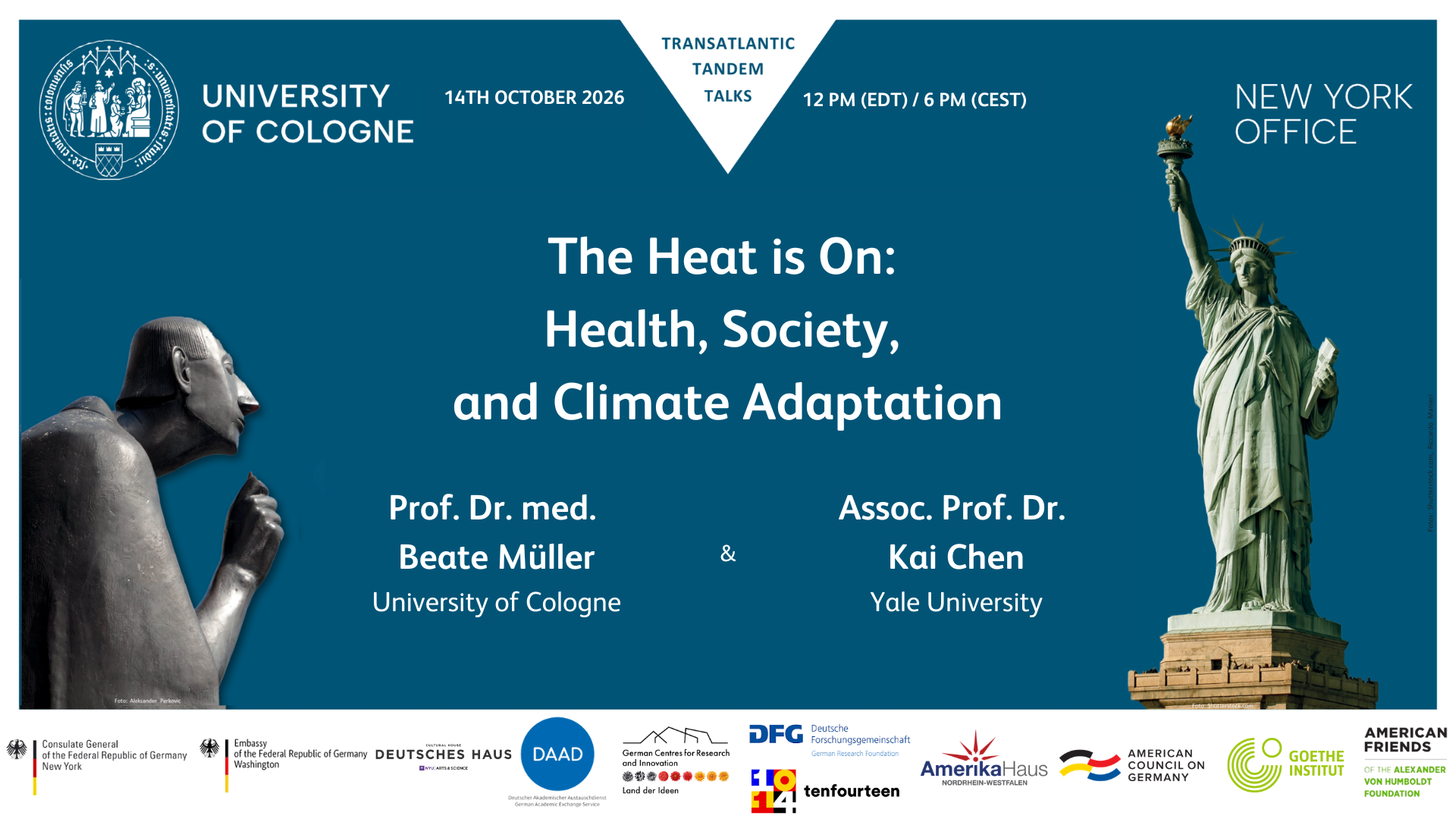
A truly hot topic: With rising temperatures and more frequent heat waves, the health impacts of heat are becoming increasingly urgent. Yet temperatures do not need to reach extreme levels to pose serious risks. They can trigger heart attacks and strokes and contribute to a growing burden of heat-related mortality that is likely to intensify with climate change and population aging. The effects are felt not only at the level of public health but also in everyday medical care, where a prescription that is safe in the winter may become dangerous during a hot summer.
How dangerous is heat really, even when temperatures do not appear extreme? How do rising temperatures affect healthcare systems, patients, and vulnerable populations? What forms of prevention, patient education, and community support are needed to reduce heat-related health risks? And how can societies adapt to the growing public health challenges posed by a warming world?
Join us for a discussion with experts from both sides of the Atlantic as they compare perspectives from Germany and the United States, explore the medical and social dimensions of heat protection, and consider how healthcare systems, patients, and communities can respond to rising temperatures. The conversation will address both the immediate health risks posed by heat and the broader societal challenge of strengthening resilience in a changing climate.
Welcoming Remarks:
· Dr. Eva Bosbach, University of Cologne New York Office, Executive Director
· Dr. Stephan Isernhagen, DFG Office North America, Director
Speakers:
· Prof. Dr. Beate Müller, University Hospital Cologne / University of Cologne – Director of the Institute of General Practice and Professor for General Practice, with a focus on planetary health in primary care
· Assoc. Prof. Dr. Kai Chen, Yale School of Public Health – Associate Professor of Environmental Health Sciences and Faculty Director of the Yale Center on Climate Change and Health



A truly hot topic: With rising temperatures and more frequent heat waves, the health impacts of heat are becoming increasingly urgent. Yet temperatures do not need to reach extreme levels to pose serious risks. They can trigger heart attacks and strokes and contribute to a growing burden of heat-related mortality that is likely to intensify with climate change and population aging. The effects are felt not only at the level of public health but also in everyday medical care, where a prescription that is safe in the winter may become dangerous during a hot summer.
How dangerous is heat really, even when temperatures do not appear extreme? How do rising temperatures affect healthcare systems, patients, and vulnerable populations? What forms of prevention, patient education, and community support are needed to reduce heat-related health risks? And how can societies adapt to the growing public health challenges posed by a warming world?
Join us for a discussion with experts from both sides of the Atlantic as they compare perspectives from Germany and the United States, explore the medical and social dimensions of heat protection, and consider how healthcare systems, patients, and communities can respond to rising temperatures. The conversation will address both the immediate health risks posed by heat and the broader societal challenge of strengthening resilience in a changing climate.
Welcoming Remarks:
· Dr. Eva Bosbach, University of Cologne New York Office, Executive Director
· Dr. Stephan Isernhagen, DFG Office North America, Director
Speakers:
· Prof. Dr. Beate Müller, University Hospital Cologne / University of Cologne – Director of the Institute of General Practice and Professor for General Practice, with a focus on planetary health in primary care
· Assoc. Prof. Dr. Kai Chen, Yale School of Public Health – Associate Professor of Environmental Health Sciences and Faculty Director of the Yale Center on Climate Change and Health


A truly hot topic: With rising temperatures and more frequent heat waves, the health impacts of heat are becoming increasingly urgent. Yet temperatures do not need to reach extreme levels to pose serious risks. They can trigger heart attacks and strokes and contribute to a growing burden of heat-related mortality that is likely to intensify with climate change and population aging. The effects are felt not only at the level of public health but also in everyday medical care, where a prescription that is safe in the winter may become dangerous during a hot summer.
How dangerous is heat really, even when temperatures do not appear extreme? How do rising temperatures affect healthcare systems, patients, and vulnerable populations? What forms of prevention, patient education, and community support are needed to reduce heat-related health risks? And how can societies adapt to the growing public health challenges posed by a warming world?
Join us for a discussion with experts from both sides of the Atlantic as they compare perspectives from Germany and the United States, explore the medical and social dimensions of heat protection, and consider how healthcare systems, patients, and communities can respond to rising temperatures. The conversation will address both the immediate health risks posed by heat and the broader societal challenge of strengthening resilience in a changing climate.
Welcoming Remarks:
· Dr. Eva Bosbach, University of Cologne New York Office, Executive Director
· Dr. Stephan Isernhagen, DFG Office North America, Director
Speakers:
· Prof. Dr. Beate Müller, University Hospital Cologne / University of Cologne – Director of the Institute of General Practice and Professor for General Practice, with a focus on planetary health in primary care
· Assoc. Prof. Dr. Kai Chen, Yale School of Public Health – Associate Professor of Environmental Health Sciences and Faculty Director of the Yale Center on Climate Change and Health