.jpg)

.png)
Open Houses: Jane Addams Hull-House, Chicago
At Hull House in Chicago, unlikely cultural encounters dissolved barriers of class and education, fostering social change and peace—then and now.
Step into the homes of writers, artists, and thinkers where discussions and debates nested democracy in our cities—and be part of today’s conversations at these historic locations.
On 9 July 1915, New Yorkers gathered at Carnegie Hall to hear American activist and founder of Hull House, Jane Addams. She spoke about her recent visit to the “warring nations” of Europe, then engaged in WWI, where she served as President of the Women’s Peace Convention held at The Hague. The New York Times summarized her speech in one of its headlines: “Young men, who are doing the fighting, don’t want the war,” which sparked uproar among some readers and attendees of the welcoming mass meeting.
But Addams insisted the war needed careful understanding. For five weeks, she and her female companions had met Prime Ministers and traveled to six different European nations. A common sentiment among all nations was that this was an “old man’s war.”
She recounted instances of young soldiers of all sides who refused to shoot to kill in the trenches and said that to get bayonet charges, all nations make their soldiers practically drunk. “In Germany, they have a regular formula for it,” she said. “In England, they use rum and the French resort to absinthe.” Addams and the other women were cautious not to jump to conclusions, either to exaggerate the effect of any work they had done or to overestimate the courtesy extended to them by the various foreign offices.
Addams was a pacifist and could see through the trenches. She actively participated in peace activism and, ahead of her time, could see women’s significant role in preserving peace internationally. In 1898, she joined the Anti-Imperialist League, opposing the U.S. annexation of the Philippines, and in 1931 became the first American woman to be awarded the Nobel Peace Prize.
At home, she was a suffragist and a progressive social reformer who, with Ellen Gates Starr, co-founded Hull-House in Chicago in 1889 as part of the settlement movement.
During the 1880s, Czech, German, Greek, Irish, Italian, Polish, and Russian immigrants settled in the Near West Side of Chicago. Hull-House emerged as a significant social settlement in a poor urban area, providing vital services like kindergarten, employment assistance, and health care. Volunteers shared knowledge and culture — English and citizenship courses, theater, music, and art classes — in solidarity with immigrant neighbours neglected by the city, who lived in crowded tenements and worked long hours in nearby factories.
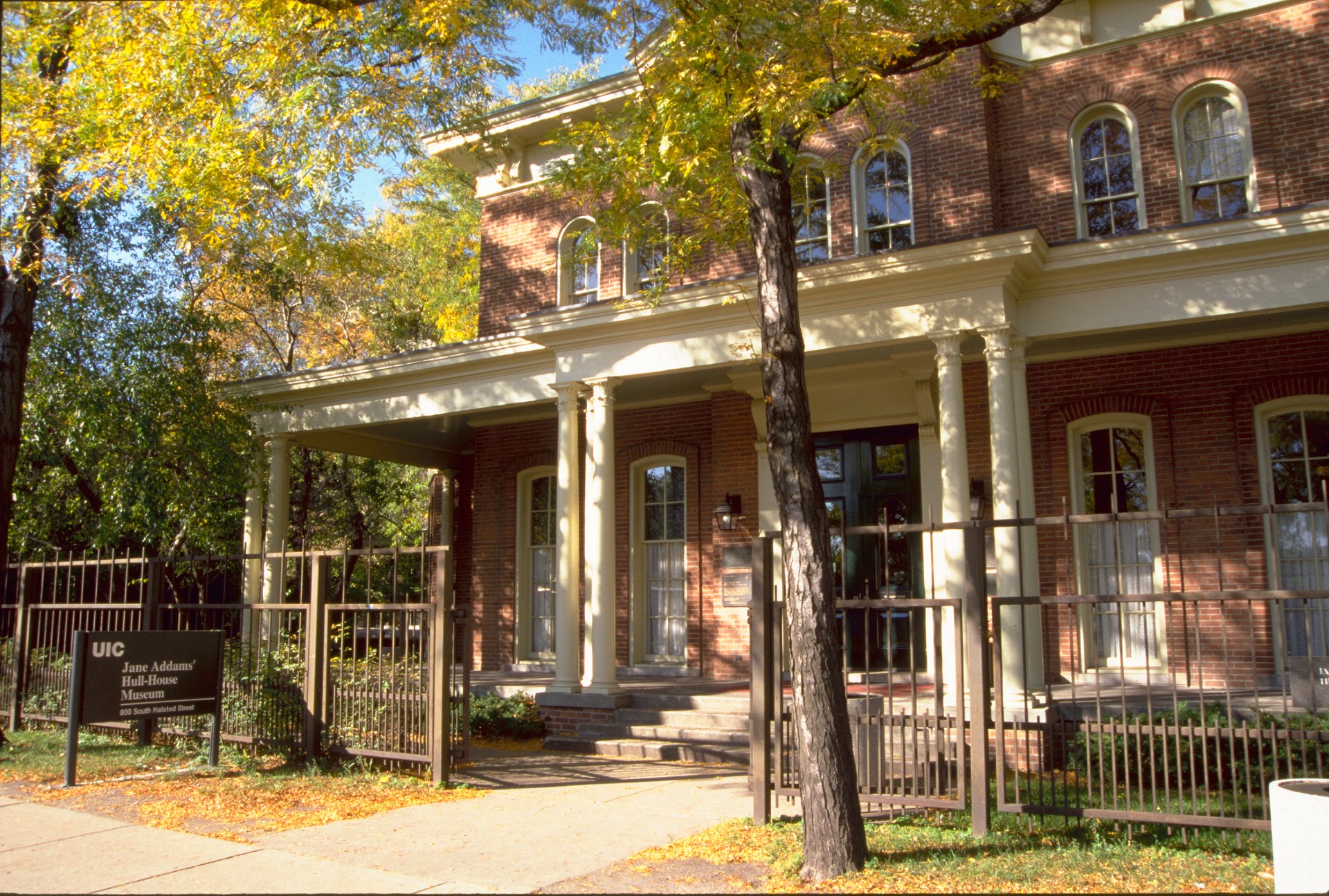
Hull House was above all a brewing hub for social progress in areas such as education, labor rights, and juvenile justice because so many early reformers who worked at the house took their concerns beyond providing services and advocated for social improvements. Hull House Women’s Club members championed sanitation reforms to end disease caused by poor hygiene conditions in the city; others spearheaded immigration rights and housing reforms. Overall, Hull House affected policy on a large scale, in the city and on a national scale.
Today, two buildings remain as the Jane Addams Hull-House Museum, which is now part of the university’s College of Architecture, Design, and the Arts (CADA). Open to the public, the team behind this house connects its historical work to contemporaries involved in similar causes. The house's early efforts and social achievements inform many of its programs and exhibitions. The message is clear: we can’t rest on our laurels, social transformation is a continuous endeavour.
.jpg)
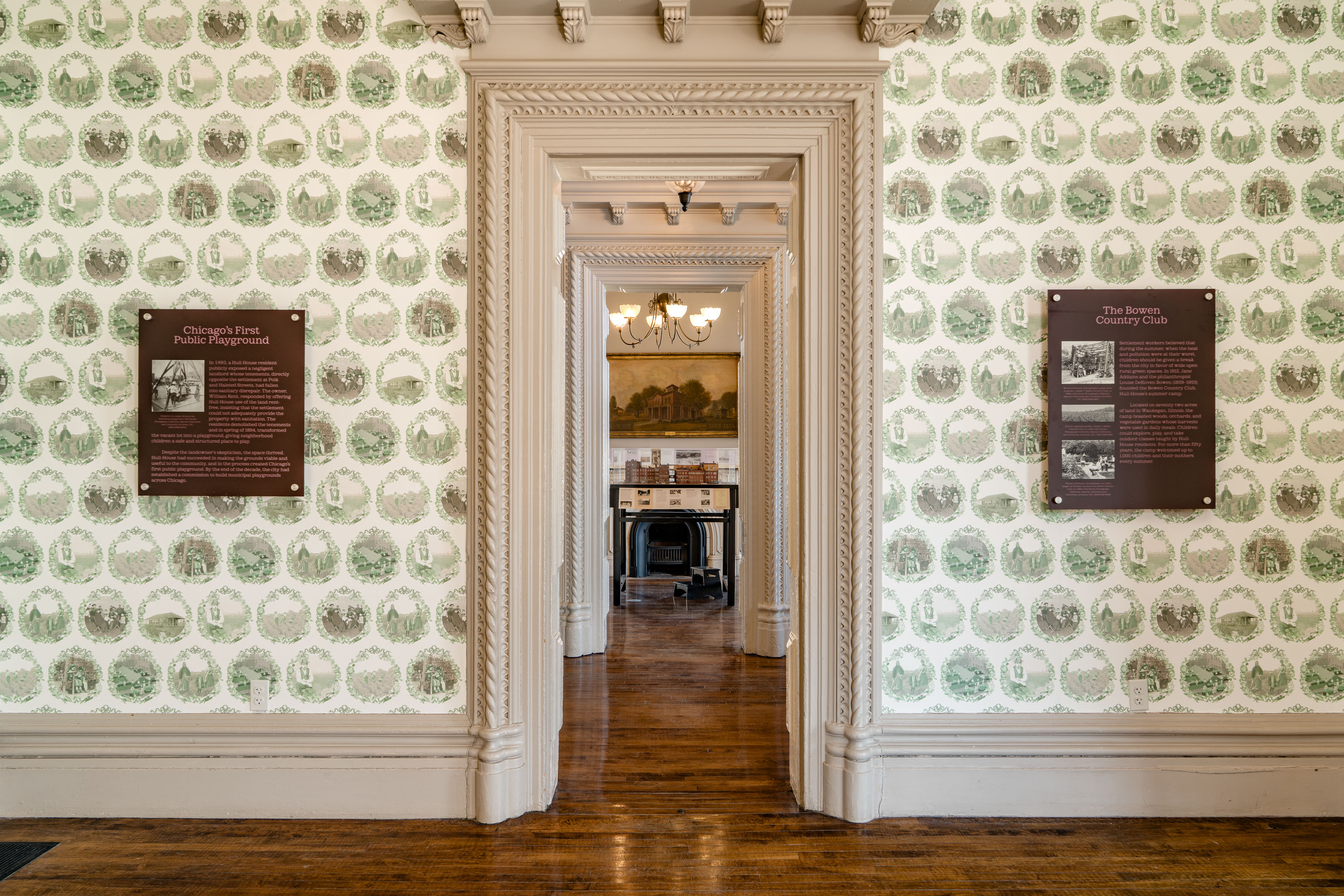
The current exhibition “Perennial City: Experiments in Urban Gardening” contains all the historical elements but feels so close to our urban present. Early in the house's history, a group of families, the People's Friendly Club, began urban gardening in Chicago. Later on, Hull House became more involved, brokering deals with larger corporations, such as International Harvester, that provided land and support for people to run larger-scale urban gardens from 1909 to 1917. Today, local artists participate in urban gardening projects throughout Chicago, showcased alongside the exhibition. Nadia Maragha, Education Manager at Hull House, explains, “We give people the opportunity to see that this work is still being done in Chicago and that they can get involved.”
The house's programming is broad, often connecting with various communities. A past initiative, “Making the West Side: Community Conversations on Neighborhood Change,” brought together scholars, activists, neighborhood residents, and other stakeholders to explore the history of change on Chicago’s West Side. This year, the museum continues a series centered on theater, reminiscent of Hull House's historical involvement in the theater sphere.
Art was fundamental to Addam’s concept of community, encouraging people to think independently and promoting interdisciplinary thinking. One room at Hull House is dedicated to arts education programs, featuring paintings and many ceramic pieces — there are over 5,000 objects in the house’s collection — as well as contemporary art. Addams perceived art as the essential means of revealing the city's diversity through creativity, collective self-exploration and experiences, and intercultural exchange.
Visitors to Hull House come from all over the country, drawn by the space's history, many of whom are involved in social work and public policy. There are also many student groups on field trips, collaborating with educators from the University of Illinois Chicago and partnering with organizations within the university. Additionally, local Chicagoans engage with the house’s public programming hosted in the impressive Residents’ Dining Hall.
%20(1).jpg)
Another inspiring space in the house is Jane Addams's bedroom, which, during a semester, was available for UIC students, faculty, and staff to take a nap as part of the Jane Addams Bedroom Project. They could reserve the space for one hour to rest and detach themselves from the campus noise. Maragha noted, “Many were excited about the opportunity to be in the bedroom of the country’s most influential social reformer. Students often expressed the need for a quiet place for a while because the campus is so busy. Overall, people seemed to really engage with the idea and found it intriguing.” Many visitors wrote poems and reflected in a guest book left in the bedroom, often engaging with the space’s history and centering themselves within that history in a way.
Later in her life, Addams dedicated herself more to peace activism. Her book Newer Ideals of Peace (1907) transformed the peace movement worldwide by incorporating ideals of social justice. She recruited social justice reformers like Florence Kelley to join her in the new international women's peace movement after 1914. Kelley, an activist for women’s suffrage and African American civil rights, had studied at the University of Zurich—the first European university to grant degrees to women—and spoke German fluently. She also translated the works of German philosopher and theorist Friedrich Engels.
Addams and her female allies shared ideals and networks with an earlier generation of German-descended pacifists, social reformers, and intellectuals, many of whom had roots in the 1848 Revolutions and had emigrated to the U.S., such as the progressive Carl Schurz—though no encounters between them are recorded. For her peace activism, Addams cultivated transatlantic networks and was involved in multiple international women's peace organizations and a growing feminist anti-militarism movement.
Hull House served as a space where unexpected cultural connections occurred and where the narrow boundaries of class, culture, and education nurtured histories of social transformation. Consequently, Addams began to associate peace with social justice. Today, entering Hull House feels like the right place to start understanding the social challenges of our time and the true causes of war and conflict at this moment in history.
Cover photo: Inside Jane Addams Hull-House Museum. Photography by Robert Chase Heishman for Bob.
This article is part of the series The City’s Best Houses Open to the Public, in partnership with The Urban Activist
Posted in
Partners
this series of articles is created in partnership with
The Urban Activist
The Urban Activist an independent, nonprofit publication that covers the world’s biggest challenges through the lens of local action and the power of city people to create social change.